Best Permanent Tooth Replacement Options for Missing Teeth
You sat down to look up one thing: how to replace a missing tooth. Twenty minutes later you have nine tabs open. One article says implants are the only real answer, the next one says a bridge is faster and cheaper, and somewhere in there someone mentioned bone grafting and now you're a little worried.
The information out there isn't wrong. It's just scattered, and none of it knows anything about your specific situation.
In most cases, there are three permanent replacement options worth knowing about: a dental implant with a crown, a fixed dental bridge, and implant-supported dentures for a full arch. Which one is right for you depends on how much bone you have in the area, how many teeth are missing and where they are, the health of the teeth on either side of the gap, and how much time you have for treatment.
If bone volume is low where the tooth used to be, bone grafting may need to come first to build a stable foundation. Dr. Holly and the team at Westfield Smiles walk families through this decision all the time, and we're happy to talk it through with you at (908) 233-9280.
What to know first
- A single dental implant is the closest thing to a natural tooth because it replaces the root underneath, not just the visible tooth above the gumline.
- A fixed bridge is faster and less involved, but it relies on the healthy teeth on either side of the gap for support.
- Implant-supported dentures use a small number of implants to anchor a full arch of teeth in place. That is a different situation than replacing a single tooth, and the approach reflects that.
- Bone volume is usually the biggest deciding factor. A 3D scan tells us exactly how much bone is available at the site. If there is not enough, bone grafting can often rebuild the foundation so treatment can still move forward.
- The word "permanent" means different things depending on the option. Some restorations are fixed in place and never come out. Others are designed to be removed for cleaning, even though the implants holding them stay in your jaw permanently. It helps to know which kind you are considering before comparing anything else.
"Permanent" covers more ground than most people expect
When most people hear the word permanent, they picture something that goes in and stays there forever, no exceptions. That's true for implants and bridges. It's a little less straightforward for some full-arch solutions, where the prosthetic can be unclipped for cleaning even though the implants holding it in place never come out.
Both types get called permanent in everyday conversation, and that's not wrong. They just describe two different day-to-day experiences. So before you start comparing prices or timelines, it helps to ask one simple question about any option your dentist brings up: does any part of this come out of my mouth? The answer shapes how you clean it, how it feels, and what upkeep looks like years down the road.
Dental implants: replacing the root, not just the tooth
A single implant is actually three pieces working together. A small titanium post is placed into the jawbone where the root used to be. Over the next several months, the bone gradually grows around that post and bonds to it, a process called osseointegration.
Think of it as the bone accepting the post as part of itself. Once that bond is solid, a small connector piece called an abutment is attached, and a custom crown is placed on top. From the outside, it looks and functions like a natural tooth. You brush it, floss around it, and mostly forget it's there.
Why the root part matters
Your jawbone stays dense because it gets regular stimulation from chewing. Every time you bite down, forces travel through the tooth root into the bone and signal it to maintain its shape. When a tooth is lost and the root is gone, that signal stops.
Over time, the bone in that area slowly shrinks and narrows. An implant post restores that stimulation, which helps preserve the bone and the natural contours of your face over the long run.
What implants ask of you
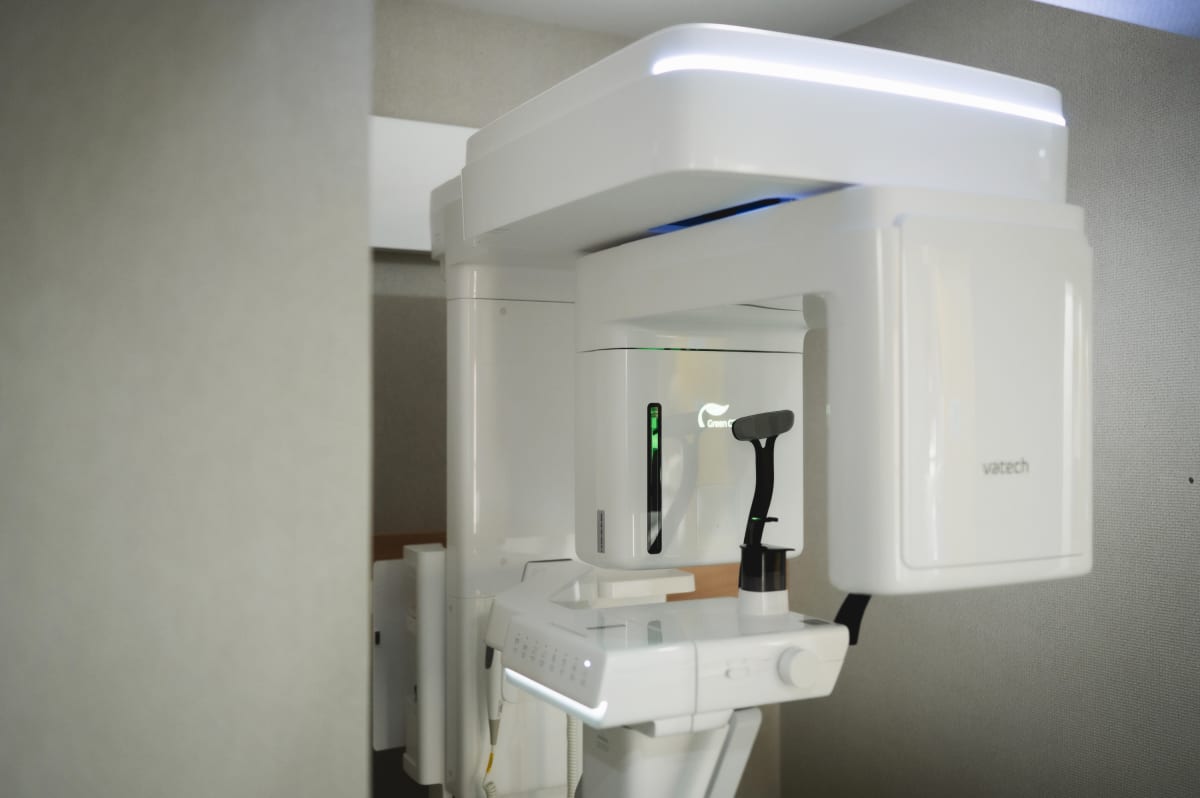
- Enough bone. Our CBCT scanner measures the height and width of your jawbone in three dimensions before anything is planned. This gives us a much clearer picture than a standard flat X-ray. If the bone in that area is too thin, bone and sinus grafting can often rebuild enough support to move forward.
- Healthy gums. If there is active gum disease present, that needs to be treated before an implant is placed. Our gum disease treatment takes care of that first so the implant has a healthy environment to heal in.
- Patience. The time from implant placement to your final crown is usually several months. Most of that time is simply your body healing, not active treatment.
- Comfort with a surgical step. Placing the implant post is a surgical procedure. It is routine and well-tolerated by most patients, and we offer oral conscious sedation for anyone who wants extra help staying relaxed, but it is worth knowing upfront that a surgical step is involved.
Where implants tend to shine
Replacing one missing tooth when the teeth on either side are healthy is close to the ideal scenario, because those neighboring teeth don't need to be touched at all. Implants also work especially well for back molars, where chewing forces are the strongest. And they are the most discreet option available. Nothing shows above the gumline except the crown itself. No clasps, no wires, nothing that gives it away. If you are missing more than one tooth, implant-supported dentures apply the same concept across a full arch.
Fixed dental bridges: the faster fixed option
A dental bridge fills the gap by placing crowns on the two teeth on either side of the space and attaching a replacement tooth in between. The whole thing is fixed in place, so nothing comes in and out of your mouth, and there's no surgery involved.
The timeline advantage
Once the neighboring teeth are prepared and we take a digital scan, you're usually looking at weeks rather than months to finish. We use iTero and Trios digital scanners for the impression step, which means no trays of goop in your mouth. If you have something important coming up on the calendar, a bridge is often the option that fits the timeline.
The trade-offs worth understanding
- The teeth on either side of the gap have to be reshaped so the crowns can fit over them. That means removing some healthy enamel permanently, and those teeth become part of the bridge going forward.
- Because there is no replacement root under the gap, the jawbone in that area will slowly lose density over time. This is one of the key differences between a bridge and an implant, since an implant post helps keep the bone stimulated the way a natural root would.
- Cleaning under the bridge takes a little extra effort. Floss threaders or a water flosser are the go-to tools, because regular floss can't reach that area on its own.
None of that makes a bridge the wrong choice. When the teeth on either side already need crowns, or when there isn't enough bone for an implant, a bridge is often the most practical and sensible path forward.
Implant-supported dentures: a different problem, a different tool
Everything above assumes a gap or two. When most or all of the teeth in an arch are gone, the question looks completely different. You're no longer replacing a single tooth; you're rebuilding an entire bite from the ground up.
Implant-supported dentures work by placing a small number of implants at carefully chosen points in the jaw, then attaching a full-arch prosthetic securely to them. It's not one implant per tooth, and it's not a conventional denture sitting loosely on your gums.
Four well-placed implants can support an entire arch, which is where the All-on-Four approach gets its name. What makes this option stand out is stability: the prosthetic stays firmly in place while you eat, and it doesn't rely on adhesive to do that.
Who this is a good fit for
This is a good fit for someone who is missing an entire upper or lower arch and wants a stable, reliable result, but for whom placing an individual implant for every missing tooth isn't practical. The benefits are real: fewer surgical sites, far better hold than a conventional denture, and a full arch restored through one coordinated treatment plan.
When bone grafting enters the picture
When teeth have been missing for a while, the jawbone in that area often shrinks down and may not have enough volume to hold implants securely. Bone grafting adds material to the site that acts as a scaffold, giving your own bone cells a structure to grow into and rebuild around. In the upper jaw, a sinus graft may also be needed to create enough height for the implants.
Grafting is a routine part of the process, but it does add healing time before implant placement can begin. A thorough evaluation, including a 3D CBCT scan, is the only way to know how much bone is actually there and what the plan needs to look like.
How the recommendation actually gets made

There's no ranking of these options from best to worst. The right one comes down to facts about your mouth and facts about your life, and a thorough exam is how we get all of that on the table.
What we look at
- Bone volume and density at the exact site. Our in-office CBCT scanner shows this in three dimensions, so we're working from a complete picture rather than a flat X-ray estimate.
- How many teeth are missing, and where they are. Front teeth, back teeth, and scattered gaps each come with different considerations.
- The condition of the teeth on either side of the gap. If they're healthy and untouched, that matters. If they're already heavily restored, that matters too.
- Gum health, how hard you bite, and whether you grind at night. If there's active gum disease, we take care of that first before placing anything.
- Your age and whether your jaw is still developing. This is especially relevant for younger patients.
What we ask you
How soon do you need to be done? Are you comfortable with a surgical step, or would you rather avoid one? Do you want something you never have to think about, or is a little hands-on maintenance okay if it means a smaller upfront cost? There are no wrong answers here. Your preferences belong in the plan just as much as the scan results do. And if nerves are part of the picture, tell us early. We'll go over sedation options at the same visit so nothing catches you off guard.
What it costs
Cost depends on which option fits your situation, how many teeth are involved, and whether grafting is part of the plan. For a single implant, most patients can expect to be in the $4,500 to $6,000 range total, though there's too much variation for a single number on a webpage to mean anything useful. We go over everything with you during the consultation, in writing, including your Delta Dental coverage, our in-house membership plan (which covers the crown portion of an implant but not the implant itself), and third-party payment plans.
Questions we hear a lot
Can I just leave the gap alone?
You can, and some people do, especially with a back molar that nobody sees. Over time, though, the bone in that spot slowly thins out because there is no longer a root keeping it stimulated. The teeth on either side can drift or tip toward the open space, and the tooth above or below the gap may shift because nothing is meeting it when you bite. All of that gradual movement adds up and can change the way your bite feels and functions.
How long do these actually last?
Implants are designed to be a long-term solution. The titanium post that goes into the jawbone can last for decades when the gums around it stay healthy. The crown attached on top is the part that sees daily wear, so it is more likely to need attention down the road. Bridges typically last many years before needing to be redone.
Does one option look more natural than another?
All three can look very natural when they are planned carefully and made well. Implants tend to have a slight edge in the very front of the mouth, because the crown comes up through the gumline the same way a real tooth does. There are no visible clasps or connectors, just a tooth that looks like it belongs there.
When you're ready to trade online advice for expert answers
If you've read this far, you're already more informed than most people who walk into a first consultation. The one thing online research can't tell you is what your own bone and gums will actually support, and that's something only an exam and a 3D scan of your jaw can show.
Families across Westfield come to us because they want the full picture explained clearly, without feeling rushed toward a decision.
Whether you end up talking through implant-supported dentures, a single replacement tooth, or something else entirely, we'll walk you through the reasoning behind every option so you can feel confident in whatever direction you choose.
Call us at (908) 233-9280 or send us a message and we'll find a time that works for you.
contact us
Call 908.233.9280 or request an appointment online to set up your first visit.