How Much Do Dental Implants Cost in New Jersey?
Dental implant pricing can be hard to pin down online. Most sources either give a range so wide it's not useful or skip the details entirely. This article is meant to change that.
In New Jersey, a single dental implant generally costs somewhere between $4,500 and $6,000 when you account for every part of the treatment. That range exists because some people need preparatory work, like a bone graft, before the implant can be placed, while others are ready to move forward right away.
This article walks through what drives the cost up or down, how insurance tends to work, and what payment options are available to help make it fit your budget. If you'd rather talk it through with someone directly, call us at (908) 233-9280 or request a visit online and we'll walk you through everything from start to finish.
What to know first
- In New Jersey, a single implant typically runs between $4,500 and $6,000, covering all three parts: the post, the abutment, and the crown.
- Always ask what a quoted price includes. Many advertised prices only cover the implant post, which is just one part of the full treatment.
- The factors that most affect the total cost are bone grafting, whether an extraction is needed first, the location of the missing tooth, and how many teeth are being replaced.
- Many dental insurance plans classify implants as elective, though some cover part of the crown since it falls under restorative care. Our team can walk you through what Delta Dental covers, how our in-house membership plan works (it covers the crown portion of an implant, though not the implant itself), and what third-party payment options are available.
- Financing plans and pre-tax dollars from an HSA or FSA are two of the most common ways patients manage the cost.
What that price actually covers
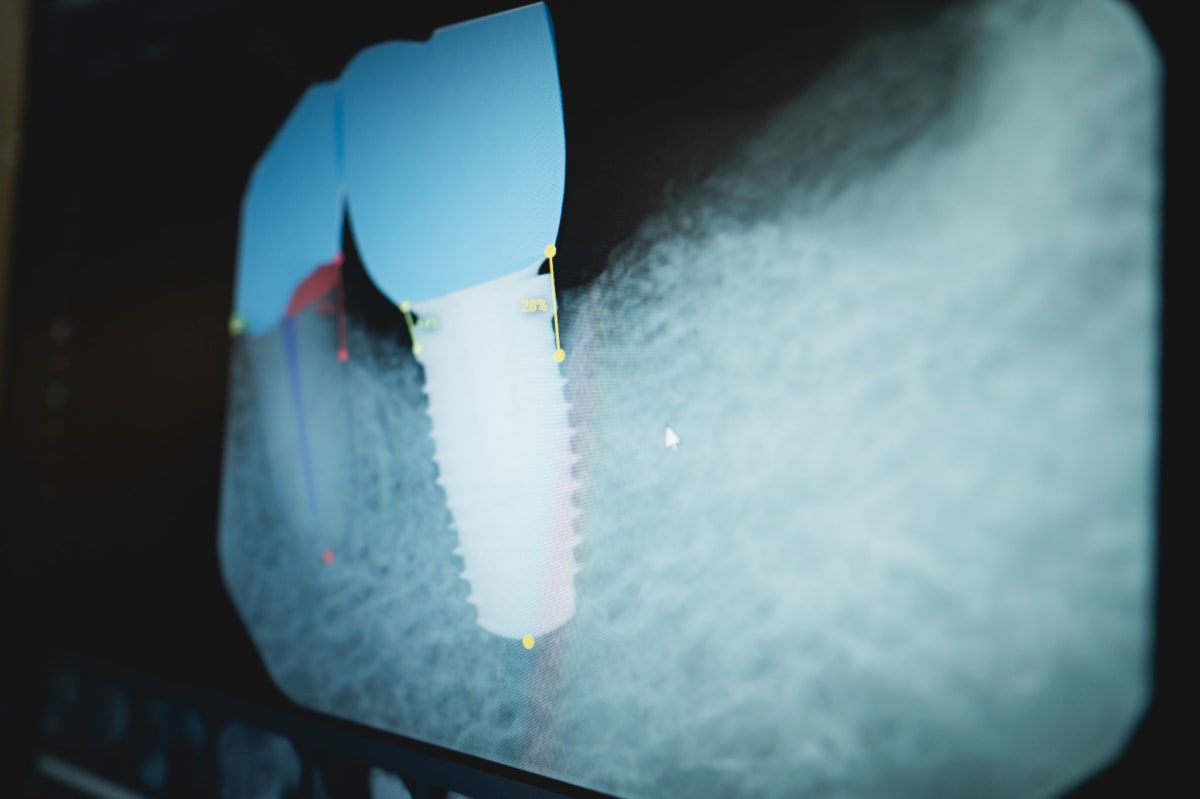
Implant pricing varies from practice to practice because different offices quote different things. Not every number you see online covers the full treatment. A complete dental implant has three separate parts, and each one carries its own cost. Knowing what those parts are makes it easier to compare quotes accurately.
The implant post
This is a small titanium screw placed into the jawbone to replace the natural tooth root. Over the months that follow, bone gradually grows around it and bonds to it, a process called osseointegration. That bonding is what gives the implant its stability and longevity. When a practice advertises a very low price, the post is usually the only part being quoted. If the jaw needs additional bone support before placement, that is handled through a separate bone grafting procedure.
The abutment
The abutment is a small connector piece that attaches to the top of the post and holds the visible tooth in place. It is a necessary part of the final result, though it rarely appears in advertised pricing.
The crown
The crown is the tooth you see and use every day. It is custom-made to match the shape and color of the surrounding teeth. The materials used can vary, which is one reason two quotes for what sounds like the same procedure can differ by hundreds of dollars.
If a quote does not include the abutment or crown, it is not a complete number. Before comparing prices, ask whether all three parts are included.
What pushes your total higher or lower

Several factors can move the final number up or down. Here are the most common ones:
- Bone grafting. When a tooth has been missing for a while, the surrounding jawbone can shrink. If there is not enough solid bone to support an implant, grafting material is placed to hold the space while new bone grows in and around it. This adds cost and healing time, but it is necessary when the jaw requires it.
- Extraction. If the tooth being replaced is still present, it needs to be removed first. That is a separate procedure with its own fee. In some cases, the site is grafted at the same appointment to help preserve the bone ahead of implant placement.
- Where the tooth sits. Back molars handle significant chewing force and sit near structures like the sinus cavity and nerve canal, which affects treatment planning. Front teeth require close attention to shade, translucency, and gum line alignment so the result looks natural.
- How many teeth are being replaced. A single tooth is a straightforward case. Replacing several teeth in different areas, or a full arch, involves a broader scope of treatment and a different pricing structure than a single-tooth estimate.
- Overall oral health. Active gum disease needs to be treated before implant work can begin. Healthy gums and adequate bone are what allow an implant to hold up over time.
These are the variables that shape a real estimate. At Westfield Smiles, we use a CBCT scanner to get a three-dimensional image of the jaw before discussing numbers, so any cost conversation is based on actual anatomy rather than assumptions.
How dental insurance usually influences what you pay
Insurance coverage for implants varies quite a bit depending on the plan, so it helps to know what to realistically expect before you call your insurer.
Many traditional dental plans classify implants as cosmetic or elective, which means they may cover little or none of the procedure. Some newer plans do pay a portion of the crown, since a crown falls under restorative work rather than elective. Even partial reimbursement can make a meaningful difference in what you pay out of pocket. We are in network with Delta Dental, and for patients whose plans fall short, we also offer an in-house membership plan and third-party payment options.
When you call your insurer, here are the questions worth asking:
- Whether implants are a covered benefit under your current plan
- Whether the crown or abutment qualifies separately as restorative work
- What your annual maximum is, and how much of it you have used this year
- Whether a waiting period applies to major procedures
- Whether any extraction or bone graft is covered even if the implant itself is not
It is also worth knowing that dental insurance maximums reset at the start of each calendar year. If treatment spans the end of the year, it may be possible to schedule the extraction and bone graft in one benefit year and the final restoration in the next, effectively using two years of coverage. This depends on healing timelines, so it is worth raising during the planning conversation.
Ways to spread the cost out
Insurance is one piece of the puzzle. Knowing your other options before the consultation makes that conversation a lot less stressful.
Financing and monthly payment plans
Healthcare financing lenders break the total into monthly payments over a set period of time. We work with several third-party payment plan options, and our team can walk you through which one makes the most sense for your treatment when you come in.
Our in-house membership plan
We offer a membership plan directly through our office that gives you access to discounted care. It is not insurance and will not cover the implant itself, but it does cover the crown portion and lowers the cost of routine visits that happen before and after treatment. Ask our team about it when you call or come in.
HSA and FSA dollars
Health Savings Account and Flexible Spending Account funds can typically be used toward implant treatment. Because those dollars were never taxed, they stretch further than paying out of pocket. One thing to keep in mind: FSA funds often expire at the end of the year, so it is worth asking our team about scheduling before that deadline passes.
Why the lowest quote isn't always the cheapest outcome
Price is an important factor, but it helps to understand what you're actually comparing. A well-placed implant that integrates properly with healthy bone can last for decades. If placement is off or the implant fails, the cost of additional procedures and healing time can add up quickly.
Before committing to any practice, these are worth asking:
- Who will be placing the implant, and how much experience do they have with similar cases?
- Does the practice use 3D imaging and digital planning, or standard two-dimensional x-rays?
- Which parts of the treatment are included in the quote, and what might be billed separately?
- What does follow-up care look like if healing doesn't go as expected?
- Who handles the final restoration, and is that part of the same quote?
Dr. Holly and Dr. Pannella both place implants here, and implants are a central part of that work.
Common questions about implant cost
Why can't a practice quote me an exact price over the phone?
Bone volume and gum health are the two biggest cost drivers, and both can only be evaluated through imaging and a proper exam. At Westfield Smiles, consultations start with a CBCT scan, which gives us a three-dimensional look at your jaw. That way, the numbers we share with you are based on your actual anatomy, not a general estimate.
Are implants more expensive than a bridge or denture?
Up front, usually yes. But bridges and dentures typically need to be replaced or adjusted every several years, while a well-placed implant can last for decades. When you factor in long-term maintenance, implants are often the more economical choice over time. If you are weighing your options, we are happy to walk you through dentures and implant-supported alternatives side by side.
Does a full-arch option cost more than several single implants?
Not necessarily. Full-arch treatment uses a smaller number of strategically placed implants to support an entire row of teeth, rather than one implant per missing tooth. Replacing many teeth individually can actually cost more than treating the whole arch together. The total depends on how many teeth are involved and the condition of the bone, which we can assess during your consultation.
Getting a number that's actually yours

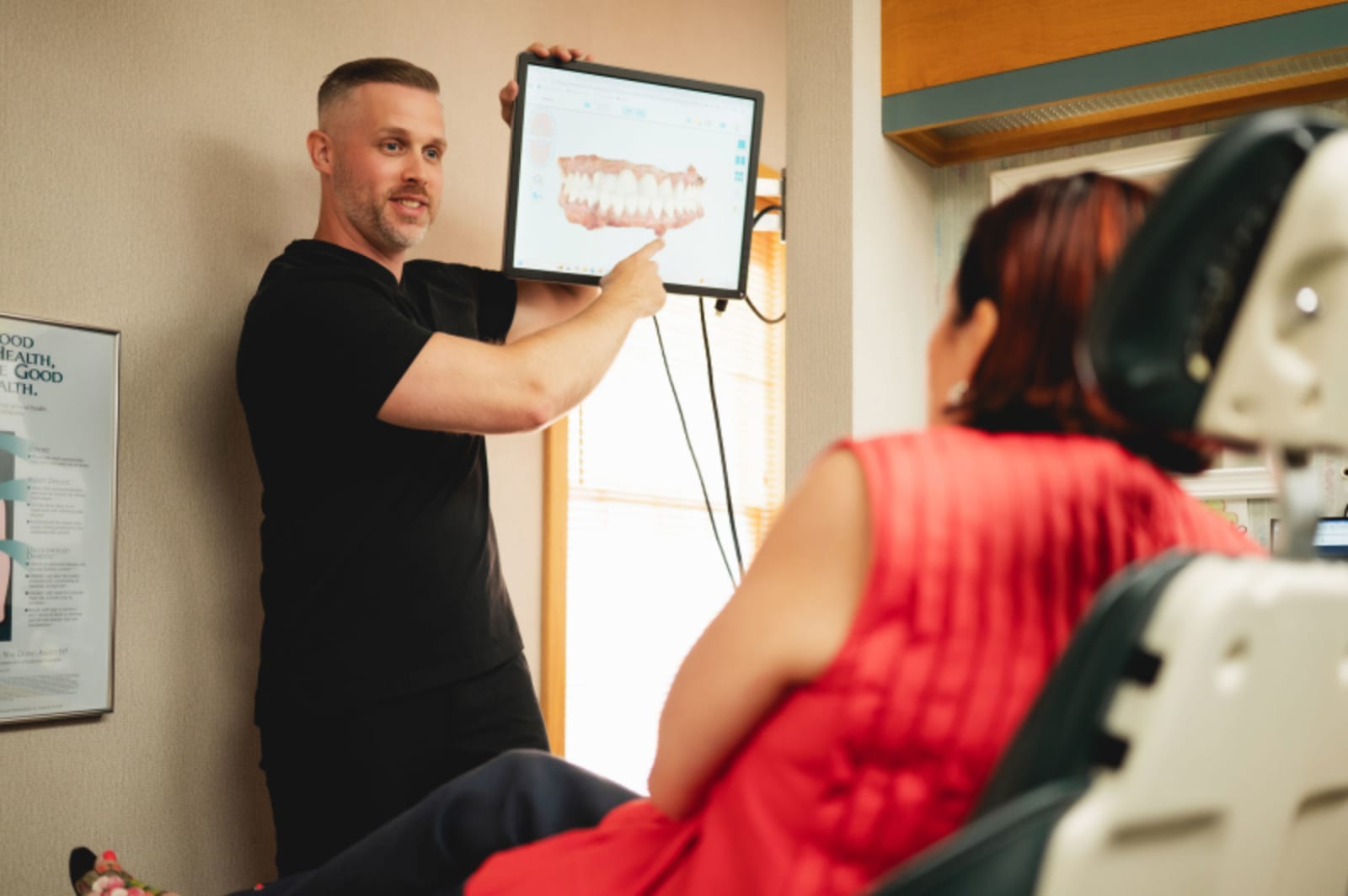
Online research can tell you a lot, but it can't tell you the condition of your bone, the health of your gums, or exactly what your treatment will involve. That's what a consultation is for. Dr. Holly and Dr. Pannella will review your situation, explain what they see in plain terms, and give you a cost estimate based on your mouth, not a statewide average.
We use in-office imaging and digital scanning to get a clear, three-dimensional picture of your jaw before we ever talk numbers, and we'll go over payment options during that same visit.
To get started, call us at (908) 233-9280. We're on East Broad Street in Westfield, and we'd be happy to talk it through with you.
contact us
Call 908.233.9280 or request an appointment online to set up your first visit.